

Do Ozempic, Wegovy, or Mounjaro cause hair loss?
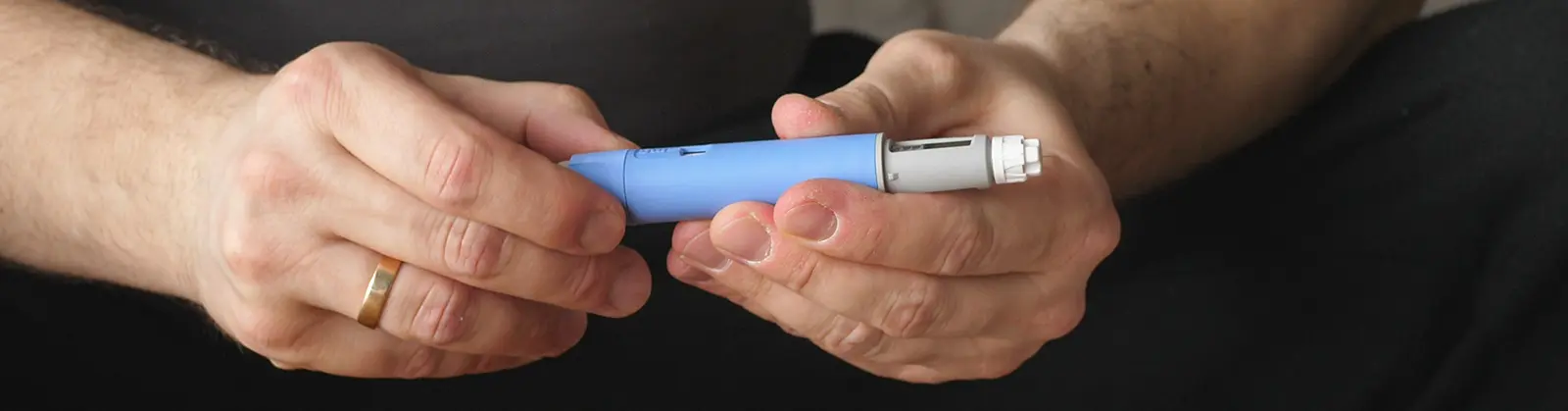
Before analyzing whether medications such as Ozempic, Wegovy, or Mounjaro cause hair loss, it is important to understand that hair loss is a multifactorial process in which various metabolic, hormonal, and nutritional factors are involved.
In recent years, the use of GLP-1 receptor agonists has increased significantly, both in Spain and Mexico, mainly in the treatment of type 2 diabetes and obesity. This rise has made it possible to observe not only their benefits, but also the emergence of new concerns among patients.
In clinical practice, it is increasingly common for patients undergoing treatment for weight loss or diabetes to report hair shedding or a decrease in hair density associated with these medications. In many cases, the main question is whether these drugs are directly causing hair loss or whether it is a reversible process.
Index
What are GLP-1 agonists?
Is there a link with hair loss?
Telogen effluvium and weight loss
Nutritional deficiencies
Underlying androgenetic alopecia
Metabolic factors
Is hair loss reversible?
What to do if hair loss occurs?
Hair assessment
Scientific evidence
Frequently asked questions
What are GLP-1 agonists?
GLP-1 receptor agonists are medications used in the treatment of diabetes and, more recently, in the management of obesity.
Among the most well-known are:
- Semaglutide (Ozempic, Wegovy)
- Tirzepatide (Mounjaro)
Their use has expanded significantly in recent years due to their effectiveness in glucose control, weight loss, and improvement of metabolic parameters.
Is there a link with hair loss?
In clinical practice, it is increasingly common for patients treated with these medications to report increased hair shedding. However, to date, a direct cause-and-effect relationship cannot be established, although a clinical association has been observed in certain patients.
In most cases, hair loss appears to be related to indirect factors associated with the treatment rather than a direct effect of the drug on the hair follicle.
Telogen effluvium and weight loss
One of the most common mechanisms is telogen effluvium. Rapid weight loss can disrupt the hair cycle, causing a greater number of follicles to enter the resting phase simultaneously. This results in diffuse hair shedding that usually appears weeks or months after the metabolic change.
This is a process we frequently observe in clinical practice, regardless of the cause of the weight loss.
Nutritional deficiencies
During treatment, changes in nutrient intake or absorption may occur.
Deficiencies in iron, protein, or certain vitamins can affect the hair cycle and promote hair loss. For this reason, it is important to assess these aspects as part of the patient’s overall evaluation.
Underlying androgenetic alopecia
In some cases, hair loss is not a new phenomenon but rather the manifestation of pre-existing androgenetic alopecia. A decrease in density makes follicular miniaturization more noticeable, a progressive process that may go unnoticed in its early stages.
This is something we frequently observe in patients both in Madrid and Mexico City, where we routinely perform hair assessments in these types of cases.
Metabolic factors
Some hypotheses suggest that these medications could influence insulin sensitivity or microcirculation. Their direct impact on the hair follicle is not yet clearly defined but remains an area of ongoing research.
Is hair loss reversible?
When the main cause is telogen effluvium, hair loss is usually temporary and reversible. However, it is important to carry out a proper diagnosis, as not all types of hair loss follow the same course or require the same management.
What to do if hair loss occurs?
If you notice increased hair shedding during treatment, it is advisable to:
- consult your doctor
- assess possible nutritional deficiencies
- review any history of alopecia
- monitor progression over time
It is important not to discontinue treatment without prior medical evaluation.
Hair assessment
Hair loss requires an individualized approach. The clinical evaluation includes:
- medical history
- scalp examination
- analysis of density and hair shaft diameter
This type of evaluation allows accurate identification of the cause of hair loss and the development of an individualized treatment approach. It is also key to correctly differentiating the origin and avoiding unnecessary or ineffective treatments.
At our hair clinic in Madrid and Mexico City, we routinely perform these types of evaluations in patients experiencing hair loss associated with metabolic changes or medical treatments. This type of consultation is becoming increasingly common among patients presenting with hair loss after weight loss.
Scientific evidence
The possible link between GLP-1 agonists and hair loss is an evolving area. Current studies describe a clinical association but do not establish a direct causal relationship.
Therefore, further research is needed, and each case should be assessed individually.
Frequently asked questions
Does Ozempic cause hair loss?
A direct relationship has not been demonstrated, although some patients may notice hair shedding during treatment.
Is hair loss permanent?
In most cases, no. It is usually reversible when related to telogen effluvium.
Should I stop the treatment?
Not without medical evaluation.
Can it worsen pre-existing alopecia?
It may make it more noticeable, especially in cases of androgenetic alopecia.
Final note
Hair loss in patients treated with Ozempic, Wegovy, or Mounjaro is usually related to indirect factors, such as weight loss or nutritional changes.
An appropriate evaluation allows identification of the cause, establishment of prognosis, and guidance of individualized management. In many cases, hair loss in this context is reversible when the underlying cause is properly identified.
This content has been prepared by the medical team at the Instituto Médico del Prado and reviewed by Dr. Bonilla Juárez and Dr. Muñoz Ramírez.
If you have noticed changes in your hair during treatment, an appropriate evaluation can help you understand what is happening and what options are available to you.
We treat patients in both Madrid and Mexico City, adapting each treatment to the individual characteristics of each patient.
The Instituto Médico del Prado is a clinic specialized in the diagnosis and treatment of hair disorders. If you would like to schedule an appointment, you can contact us through our website or usual channels.
References
Rojas Lopez RF, Barrera DL, Amaya Muñoz MC, Saavedra Diaz MP. Alopecia as an emerging adverse effect associated with glucagon-like peptide-1 (GLP-1) receptor agonists for weight loss: a scoping review. Cureus. 2025;17(8):e90021. doi:10.7759/cureus.90021.
Alsuwailem OA, Alanazi R, Almutairi HM, Asiree RH, Almutairi W, Almutairi TM, et al. Hair loss associated with glucagon-like peptide-1 (GLP-1) receptor agonist use: a systematic review. Cureus. 2025;17(9):e92454. doi:10.7759/cureus.92454.
Burke O, Sa B, Cespedes DA, Sechi A, Tosti A. Glucagon-like peptide-1 receptor agonist medications and hair loss: a retrospective cohort study. J Am Acad Dermatol. 2025;92(5):1141-1143. doi:10.1016/j.jaad.2025.01.046.
SUSCRÍBASE AL BLOG
Reciba noticias, promociones e información relevante sobre los servicios y tratamientos del Instituto Médico Del Prado.