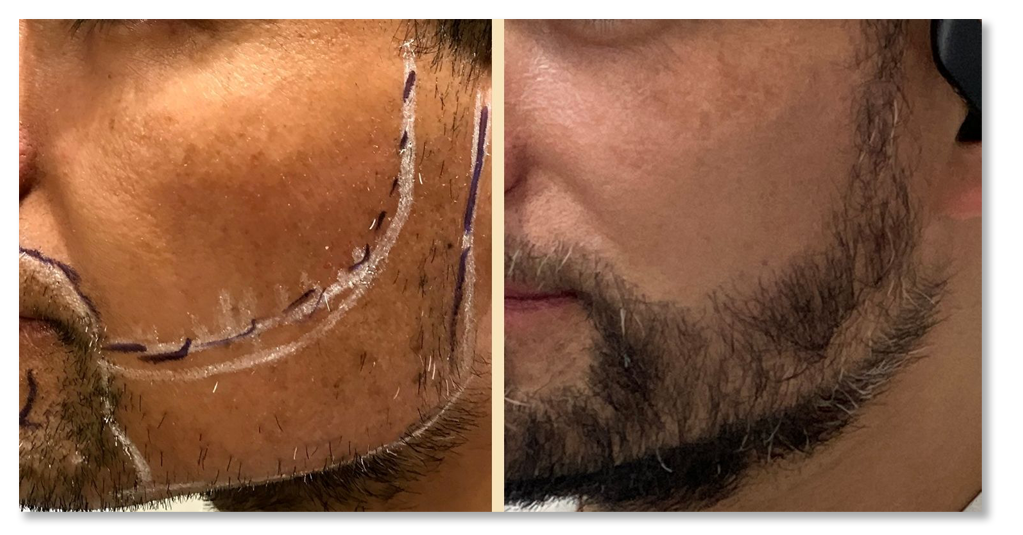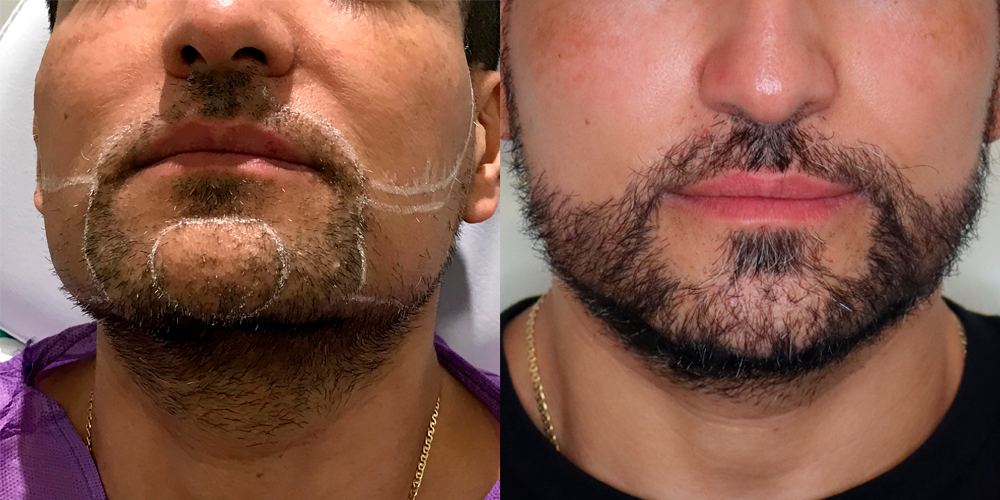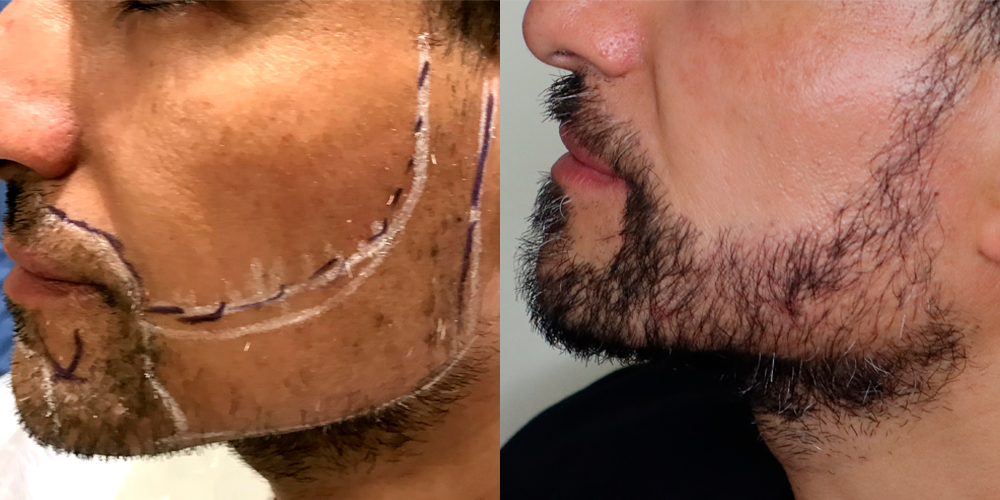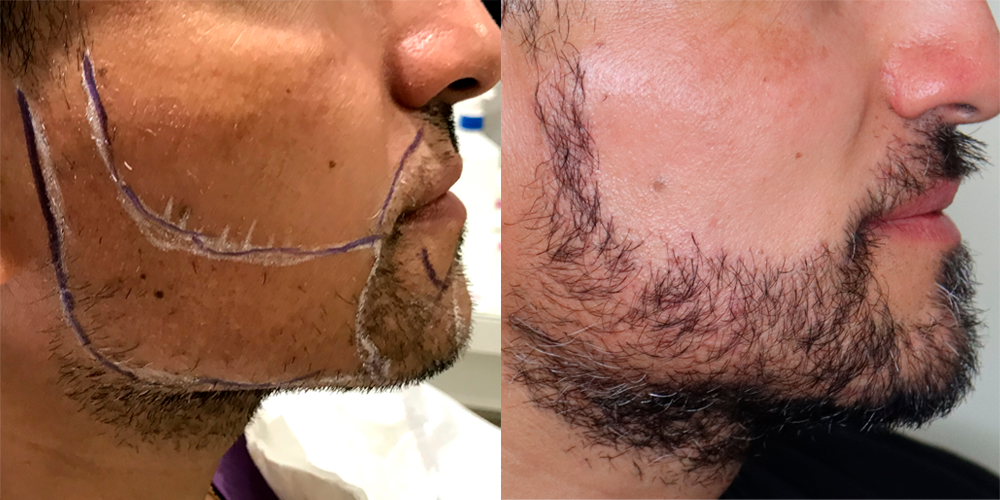

Beard transplant
The first essential step in performing a beard transplant is a proper hair diagnosis. This applies both to beard transplantation and standard hair transplants.
During this initial assessment, the doctor must examine the patient’s hair, preferably using a trichological dermatoscope. This determines whether the patient is a suitable candidate for a hair transplant, as well as whether hair treatments are needed to prepare the scalp.
Beard transplantation is a straightforward but highly meticulous procedure, often lasting more than four hours. In the first phase, the required follicular units are extracted from the donor area: the neck region. This hair is genetically resistant to hair loss and will not fall out even if beard alopecia is present.
In the second phase, the follicles are implanted into the beard area. This is where the surgeon’s expertise is critical, as they determine the position, depth, and angle of each hair. This determines whether the result looks natural.
After the procedure, washing is performed after 24–48 hours, and scab removal occurs around three weeks later. It is also very important to follow regular medical hair treatments to improve thickness, shine, and overall hair health, such as PRP or mesotherapy.