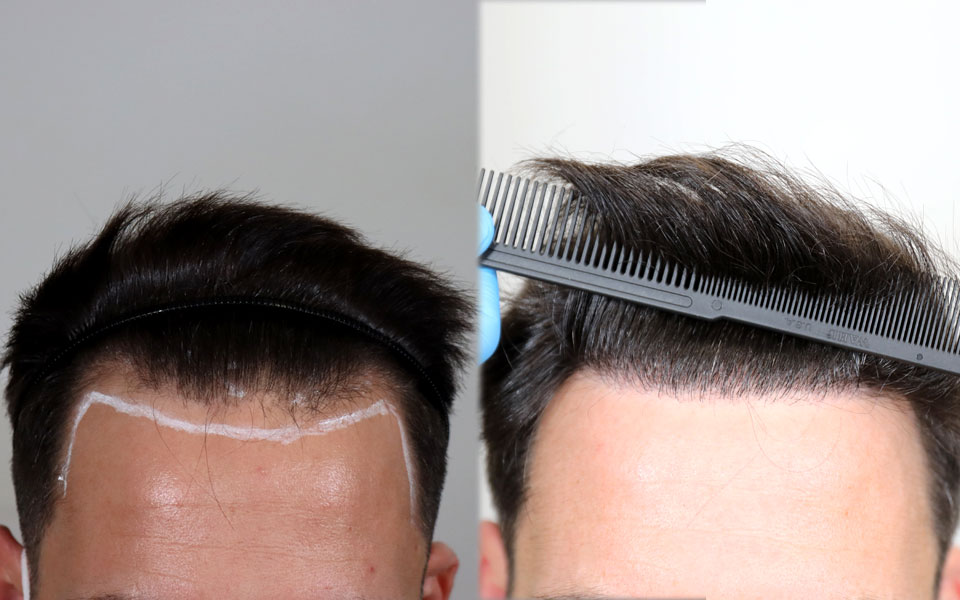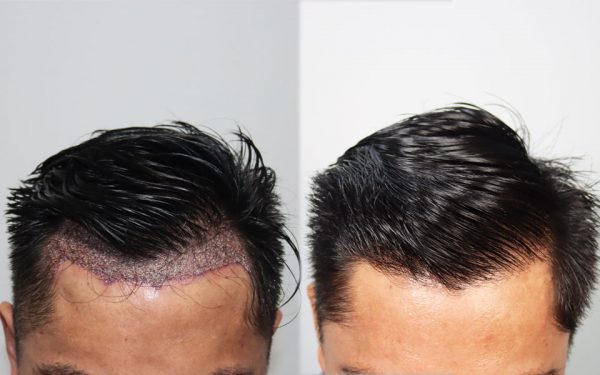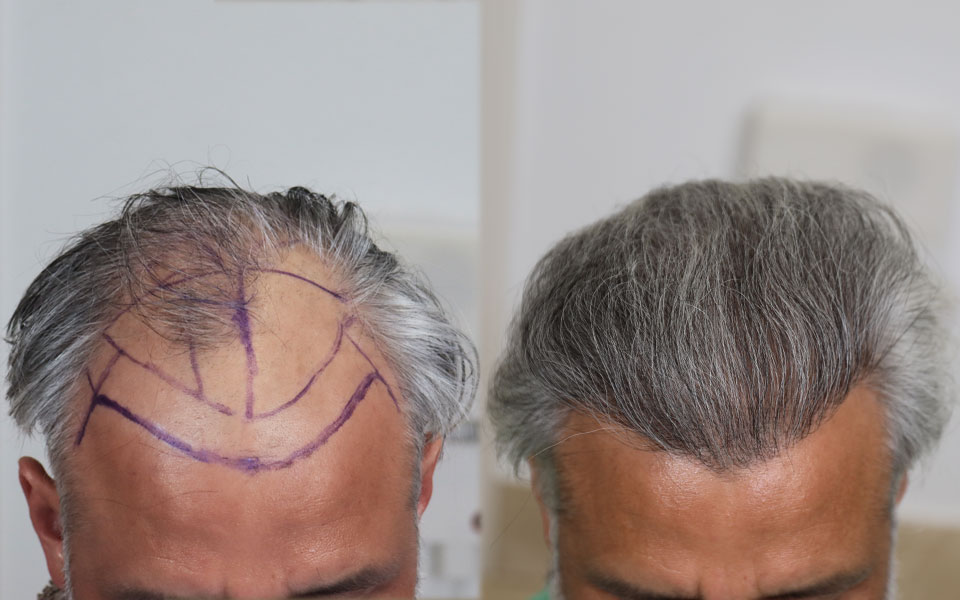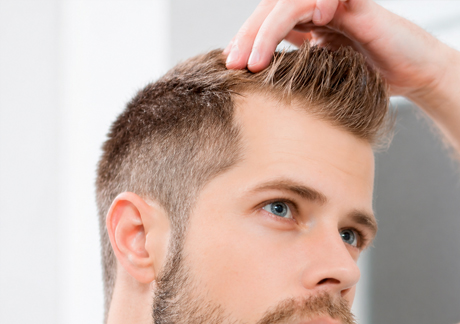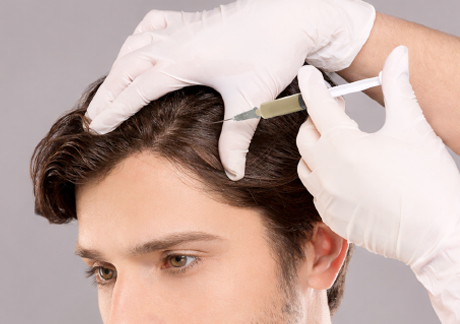

Unshaven hair transplant
A hair transplant using the FUE technique, also known as non-shaven FUE, can be performed without shaving the entire head by using a curtain-style shave or “flaps”. In other words, only a small section of the occipital area (donor area) is shaved to extract the hair follicles. This area remains hidden beneath the surrounding hair until it grows back. The rest of the scalp does not need to be shaved, making the transplant much more discreet and allowing for a considerably faster return to normal social and professional activities. Suitability for this technique must be confirmed during the diagnostic assessment consultation with one of our doctors.
An unshaven hair transplant is especially recommended for patients who:
1. Require fewer than 2,500 grafts.
2. Have localized rather than diffuse hair loss.
3. Prefer a gradual change in their appearance and want their hair transplant to go unnoticed.
During the consultation, the doctor will assess whether the patient is a suitable candidate for an unshaven hair transplant, as this technique is technically more demanding for the surgeon and requires the patient to have sufficiently long hair. It is also important to note that patients undergoing this procedure must pay particular attention to their post-operative care to ensure that the transplanted follicles attach properly to the recipient area.
This technique can be performed on both men and women, provided their hair is long enough.
The follicles extracted during an unshaven FUE hair transplant are implanted using the DHI technique.
UNSHAVEN FUE HAIR TRANSPLANT
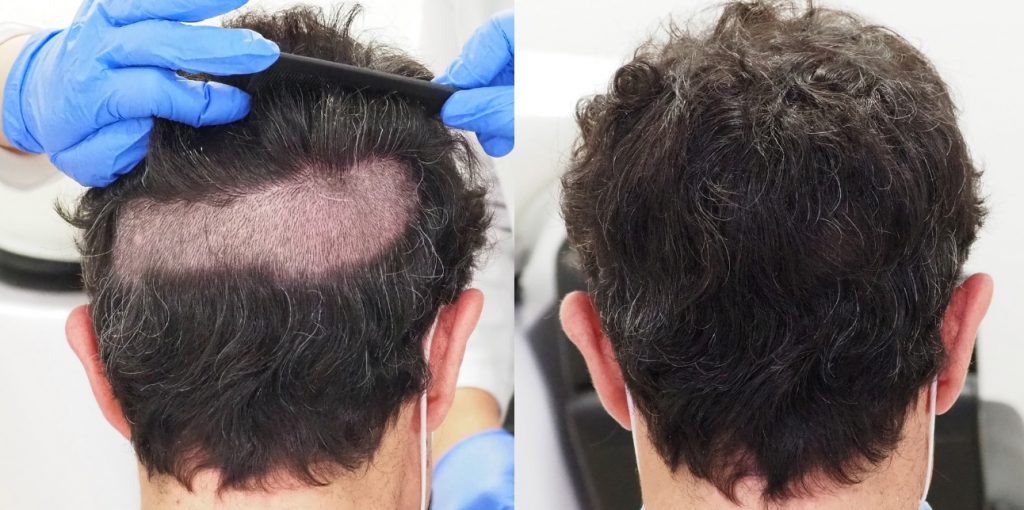
BEFORE
AFTER
Unshaven hair transplant: FUSS technique
This technique involves removing a strip of skin from the occipital (donor) area. Hair follicles are then carefully extracted from this strip and implanted one by one into the recipient area.
Dr. Espinosa Custodio rarely performs this technique, as he considers FUE to be the most suitable option in the vast majority of cases, providing superior results. However, the FUSS technique may be considered for patients who wish to undergo a hair transplant without shaving their hair.